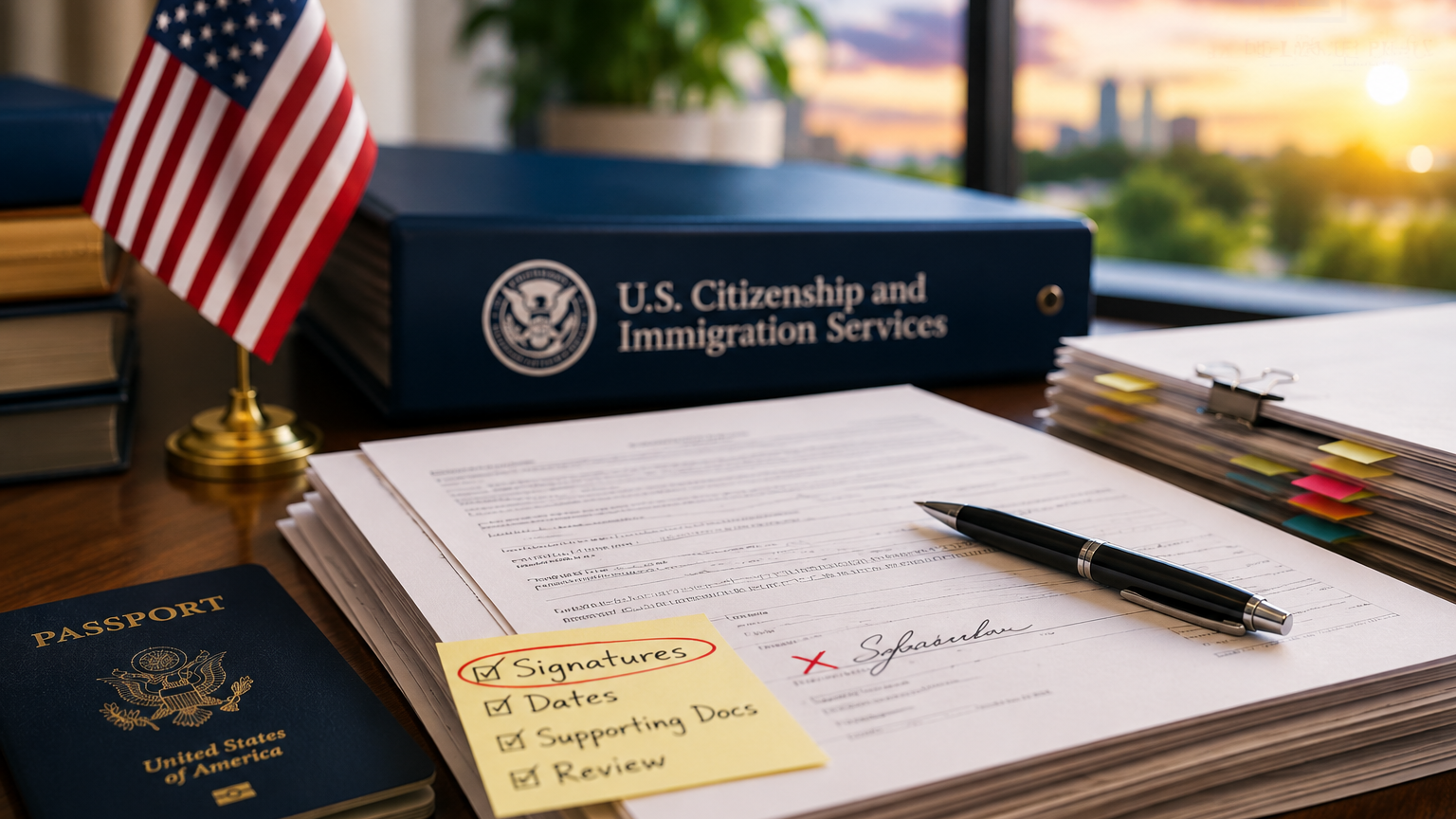
According to guidance recently published by the American Immigration Lawyers Association (AILA) regarding a new USCIS rule on signature requirements, immigration applicants may face increased risks if filing documents contain invalid or defective signatures. The rule, which takes effect on July 10, 2026, highlights the importance of careful preparation and accurate filing procedures for individuals pursuing U.S. immigration benefits.
For many professionals pursuing U.S. immigration opportunities, months, or even years, of planning can go into preparing a strong application. Whether you are applying for an EB-2 National Interest Waiver (NIW), EB-1A Extraordinary Ability petition, O-1 visa, E-2 investor visa, Adjustment of Status, or another immigration benefit, most applicants focus on qualifications, supporting evidence, and eligibility requirements.
However, this recent USCIS rule serves as an important reminder that even small filing mistakes can create serious complications. Beginning July 10, 2026, USCIS will have expanded authority to reject or deny applications if the agency later determines that a filing contains an invalid signature. For immigration applicants, this means that attention to detail throughout the filing process is more important than ever.
USCIS recently announced changes that reinforce its authority to take action when signature requirements are not properly followed. While valid signatures have always been required, the practical impact of this update is significant.
In the past, many applicants assumed that once USCIS accepted a filing and issued a receipt notice, the application had successfully passed the initial review stage. Under the updated rule, USCIS may still review signature compliance later in the process and take action if it determines that a signature does not meet agency requirements. In some situations, this could result in delays, rejection, or denial of a filing that was previously accepted.
USCIS has emphasized that signatures must reflect a genuine act of signing by the appropriate person. Examples that may create concerns include:
Because USCIS reviews each case individually, applicants should carefully follow the signature instructions for every form submitted.
For many employment-based immigration cases, timing matters. A filing date can affect:
If USCIS identifies a signature issue after a filing has already been accepted, applicants may face additional complications that could be difficult to correct later. This is one reason experienced immigration practitioners place significant emphasis on filing accuracy and quality-control procedures before a case is submitted.
The good news is that most signature-related problems can be avoided with careful preparation. Applicants should consider:
Each form may have specific requirements regarding signatures and filing procedures. Applicants should review the most current USCIS instructions before filing. Maintaining Original Signed Documents, keeping original signed copies can be helpful if questions arise during the adjudication process, avoiding shortcuts. Methods such as copying signatures from previous forms or using unauthorized digital signature methods may create unnecessary risk. Many filing issues are discovered during a detailed final review before submission. Taking time to review the entire package can help prevent avoidable problems.
As USCIS continues to place greater emphasis on procedural compliance, even highly qualified applicants can encounter setbacks if filing requirements are overlooked. This is particularly important for physicians, researchers, engineers, technology professionals, entrepreneurs, executives, and investors pursuing employment-based immigration pathways where timing and documentation often play a critical role.
Strong qualifications remain essential, but so does ensuring that every aspect of the filing package complies with USCIS requirements. The new USCIS signature rule is a reminder that successful immigration cases depend on more than meeting eligibility requirements. Careful preparation, accurate documentation, and attention to procedural details all contribute to a stronger filing.
At Zhang-Louie PLLC, our team regularly assist highly skilled professionals, physicians, researchers, entrepreneurs, executives, and investors with complex employment-based immigration matters. As immigration procedures continue to evolve, understanding new filing requirements can help applicants avoid preventable delays and position their cases for smoother processing. For many applicants, one of the best investments they can make is ensuring that their case is prepared correctly before it is submitted.
GET IN TOUCH