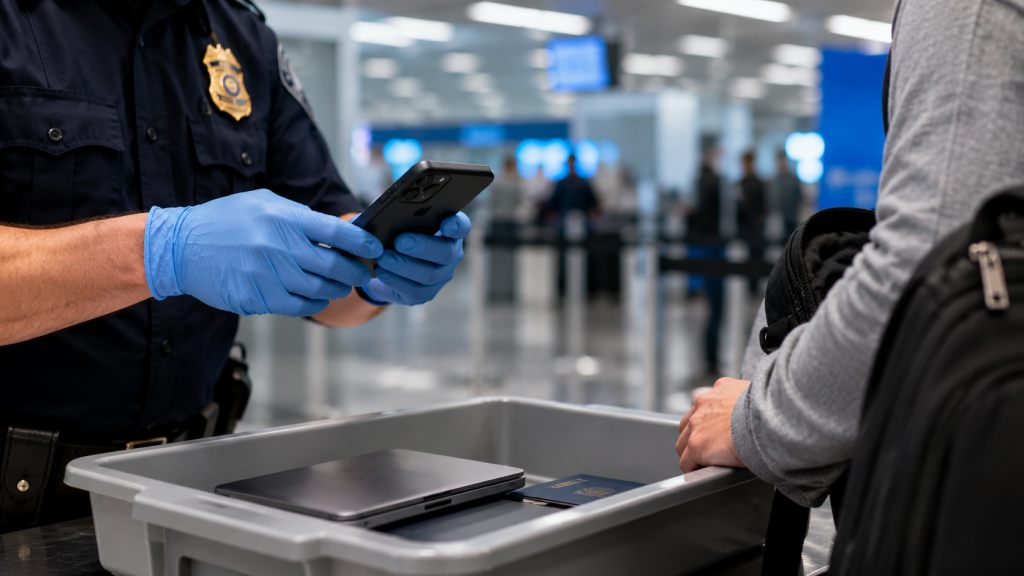
According to a recent practice update published by the American Immigration Lawyers Association (AILA), questions about electronic device searches at U.S. ports of entry continue to be one of the most common concerns for international travelers. The guidance explains how these inspections may occur and offers practical information that travelers should understand before arriving in the United States. While every situation is different, being informed about the inspection process can help travelers prepare and reduce unnecessary stress.
Whether you are visiting the United States for business, employment, investment, research, or permanent residence, it is important to understand that inspection at a U.S. port of entry may include more than simply presenting your passport and visa. In certain situations, U.S. Customs and Border Protection (CBP) officers may inspect electronic devices such as mobile phones, laptops, tablets, cameras, or other digital storage devices as part of the inspection process. For many international travelers, this raises understandable questions about what to expect and how to prepare.
Most travelers complete the inspection process without any issues. However, CBP has authority to inspect individuals and their belongings at U.S. ports of entry as part of its border security responsibilities. Electronic devices can contain large amounts of personal and professional information. As a result, travelers often wonder:
Understanding the process before you travel can help you approach the inspection with greater confidence.
According to publicly available CBP guidance referenced by AILA, an electronic device search generally involves the inspection of information stored on a device that a traveler is carrying when entering the United States.
Devices that may be inspected include:
Not every traveler will experience this type of inspection. In fact, these searches represent a very small percentage of the millions of international arrivals processed each year.
AILA explains that CBP generally recognizes two categories of electronic device searches.
Basic Search
A basic search typically involves reviewing information that is already stored on the device without using specialized external equipment. This type of inspection may be completed during the normal inspection process if an officer determines that additional review is appropriate.
Advanced Search
In certain circumstances, officers may conduct a more detailed examination using authorized technology. According to CBP policy, these searches generally require additional supervisory approval and are used only under specific circumstances.
Preparation is always helpful when traveling internationally. Some practical steps include:
Good preparation often makes the inspection process smoother and helps avoid unnecessary confusion.
Not necessarily.
Many travelers worry that an additional inspection automatically means something is wrong with their immigration case. In reality, additional screening does not automatically indicate that a visa will be canceled, an application will be denied, or admission will be refused. CBP officers evaluate each traveler individually based on the facts and circumstances of that particular case. For this reason, travelers should avoid jumping to conclusions if additional questions or inspections occur.
For professionals pursuing employment-based immigration, including EB-2 National Interest Waiver (NIW), EB-1A Extraordinary Ability, O-1 visas, E-2 investor visas, or other immigration pathways, consistency across applications, supporting documents, and travel information is essential. Preparing an immigration case carefully before filing can help reduce avoidable issues later in the process.
This is one reason experienced immigration attorneys spend significant time reviewing documentation, supporting evidence, and case strategy before applications are submitted. At Zhang-Louie PLLC, our team regularly guide physicians, researchers, entrepreneurs, executives, investors, engineers, and other highly skilled professionals through complex employment-based immigration matters. Our approach goes beyond preparing forms, we work to ensure each case is carefully developed with attention to detail, accuracy, and the unique circumstances of every client.
For international travelers, staying informed about current immigration procedures is one of the best ways to prepare for a smoother entry process and avoid unnecessary surprises.
GET IN TOUCH