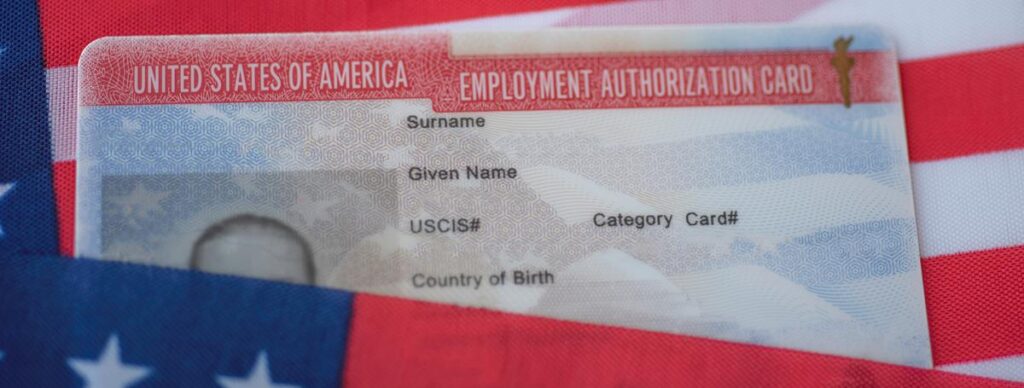
U.S. Citizenship and Immigration Services (USCIS) has announced new policy changes that will affect the validity period of Employment Authorization Documents (EADs). These updates apply to several immigration categories and will change how long certain applicants are permitted to work before renewing their EAD. Because many individuals rely on long-term work authorization for stability, it is important to understand how these new rules may affect current and future filings.
Here’s a clear breakdown of what USCIS has announced and what it means for applicants.
Beginning December 5, 2025, USCIS will reduce the maximum validity period of EADs from five years to 18 months for certain categories, including:
Applicants whose EAD applications were pending or filed on or after December 5, 2025 fall under this change. USCIS explained that the reduced validity periods are intended to allow for more frequent screening and case review, which the agency views as part of its broader vetting procedures.
Under H.R. 1, passed earlier in 2025, some EAD categories already require shorter validity periods. USCIS has now incorporated those legislative requirements into its policy manual.
For the following categories, EADs will be valid for one year or until the end of the authorized parole or TPS period — whichever is shorter:
These rules apply to all Form I-765 applications filed or pending on or after July 22, 2025.
Shorter EAD validity means:
Applicants will need to track expiration dates closely and file renewal requests earlier to avoid gaps in work authorization.
More frequent filings could affect USCIS processing volume, so applicants should plan ahead.
Because EAD validity is shorter, applicants with long-pending immigration cases may experience multiple renewal cycles.
These updates do not alter eligibility for any underlying immigration benefit, such as asylum, TPS, or adjustment of status. They only change the length of time an EAD is issued before renewal is required.
At Zhang-Louie PLLC, we actively monitor USCIS policy updates to help applicants stay ahead of changes that may affect their work authorization or case timeline. Our team assists clients by:
We aim to ensure that individuals and families remain informed and supported throughout every stage of their immigration process.
GET IN TOUCH