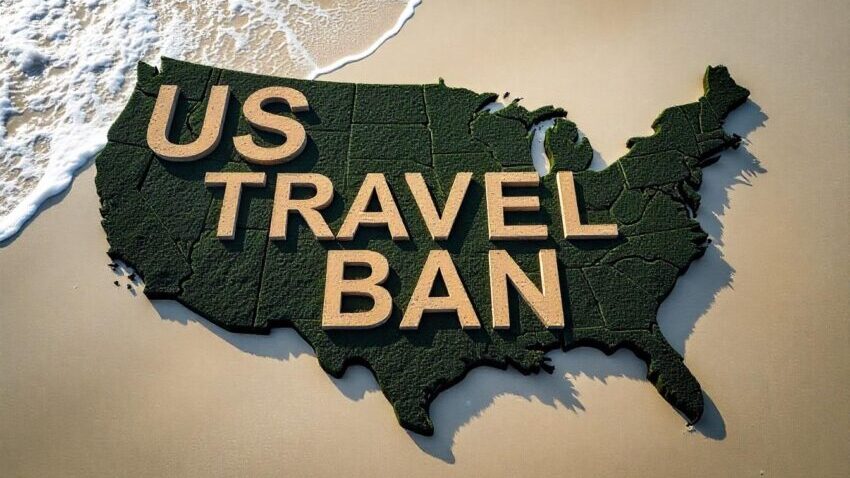
A major update to U.S. immigration policy took effect on January 1, 2026, when an expanded Presidential Proclamation restricting entry and visa issuance for certain foreign nationals became effective. This affects both immigrant visas and nonimmigrant visa categories for nationals of certain countries. Understanding these changes is crucial for anyone planning to file or currently navigating EB-2 National Interest Waiver (NIW) or EB-1A extraordinary ability petitions — particularly if consular processing or international travel may be part of your plan.
The U.S. government’s stated goal with these restrictions is to enhance screening and vetting of applicants to protect national security and public safety.
Nationals of the following countries face a full suspension of entry into the United States (immigrant and nonimmigrant visas) if they are outside the United States and do not hold a valid U.S. visa as of January 1, 2026:
Nationals of these countries are subject to suspension of immigrant visa issuance and restrictions on some nonimmigrant visa categories (including B-1/B-2, F, M, and J), if they lack a valid visa at the effective date:
These lists were expanded through Presidential actions in 2025 and adjusted as part of U.S. national security policy.
Note: Nationals of these countries already in the U.S. with a valid visa or adjustment of status application are generally not subject to the entry ban on January 1, 2026, provided they remained in status and do not travel internationally without proper documents.
If you are outside the U.S. and planning consular processing (i.e., completing your green card process at a U.S. embassy or consulate), the expanded travel ban may significantly delay entry and visa issuance.
U.S. consular posts may schedule interviews but are limited in issuing immigrant visas to nationals of impacted countries while the restrictions remain in effect. This can slow the final step of your green card process, even if your petition has been approved.
For individuals already in the U.S. and eligible to file an Adjustment of Status (AOS) (Form I-485) based on an approved EB-2 NIW or EB-1A, a temporary pause or slow-down in adjudication has been reported by USCIS for certain applicants from the list of travel-restricted countries. These pauses were first broadened in a USCIS policy memorandum in early January 2026, affecting benefit applications (including I-140 and I-485) for foreign nationals born in or citizens of designated countries.
Travel outside the U.S. during this period, without advance permission such as Advance Parole, could jeopardize your status or pending application. This is especially important for EB-2 NIW or EB-1A applicants who may have dual intentions (immigrant and nonimmigrant). Traveling without the appropriate authorization can trigger issues under current travel restriction policies, even if your petition is pending or approved.
Even though visa issuance may be delayed due to the ban, filing your EB-2 NIW or EB-1A petition now continues to be strategically important for several reasons:
1. Establishes Priority in the Queue
Submitting your petition while the policy is effective locks in your priority date and begins preliminary processing steps. When the restriction lifts or changes, your case will be positioned to move forward without having to wait longer for a fresh filing.
2. Early Processing Can Avoid Future Delays
Historical experience — including during prior travel bans — shows that individuals who filed petitions during a restriction period were often able to progress more quickly once the restrictions eased, compared to those who waited to file later.
3. Preserves Momentum
Waiting until after restrictions end can significantly delay your timeline, as you would be entering the queue later and losing processing momentum.
If you are inside the United States with a pending green card application, do not travel internationally unless you have confirmed valid Advance Parole. Exiting the U.S. without Advance Parole while your case is pending, especially during travel bans, can cause serious complications and may jeopardize your ability to return or pursue your immigrant petition.
At Zhang-Louie PLLC, we focus exclusively on U.S. immigration law. We do not act as job placement agencies or recruiters. Instead, we help individuals and families understand how policy changes may affect their immigration strategies and planning.
If you are unsure where you fall under these updated travel restrictions, whether filing now makes sense, or what options you have, especially for EB-2 NIW or EB-1A petitions, it’s important to consult with experienced immigration counsel before making travel or filing decisions.
We are monitoring changes closely and will update clients as policy evolves. Planning early and strategically can help preserve your immigration goals even amid uncertainty.
GET IN TOUCH